The price of getting in
Buying a home in Spain costs much more than it did ten years ago, and wages have not kept pace. Weeks before the November 29 election, the Government and Congress are clashing over the rules for renting.

Spain · Housing · November 29 election · Period covered: 2015–2026 · Data and decrees checked on October 21, 2026
What is happening now
- ElectionThe dissolution of the Cortes (Spain's parliament) and the call for a general election on Sunday, November 29, are published. V18
- In forceDecree 29/2026 comes into force. V20
- ScheduledDecree 28/2026, the one on rentals, would come into force. V19
A decree-law applies from the moment it comes into force, but Congress has to ratify it (convalidar) within 30 working days; otherwise it is repealed. With the Cortes dissolved, the vote falls to the Diputación Permanente (the standing committee that acts for Congress while it is dissolved), which has 69 members. V23
As of October 21, the Diputación Permanente had not called any session to vote on these decrees. Several media outlets mention November 12, but there is no official notice: we treat it as an announced date, not as a fact. V22
What they change, in brief
- Rentals (decree 28/2026, not yet in force): contracts would be extended for terms of five years, or seven if the landlord is a company, unless either party gives notice. A landlord who does not renew would have to compensate the tenant. V19
- Social function (decree 29/2026, in force): until 2030 it halts evictions of vulnerable people who have no housing alternative; until the end of 2027 it caps the annual increase of existing rents at 2%, unless the parties agree otherwise; and until 2030 it restricts companies and large landlords from buying homes for less than 70% of their appraised value. It also sets a 10% VAT on renting furnished homes for fewer than 30 nights (tourist flats), but that only applies from December 1. V20
Wages are losing ground
Between 2015 and 2024, the house sales price index of Spain's National Statistics Institute (INE) rose 59.7% (annual averages). The average gross wage went from 23,106.30 to 29,540.26 euros a year: 27.8%. Both figures cover the same years and are not adjusted for inflation. V01V02V03
Scale from 0 to 80%. Source: INE, house price index (annual average) and wage structure survey. It does not measure rents or mortgage payments. V01V02V03
And it goes on: in the second quarter of 2026, sales prices were 12.2% higher than in the same quarter of 2025 (new homes, 7.4%; second-hand homes, 12.9%). V04
How much rent takes
Scale from 0 to 50%. Cities. The rent is the average for the census tract where each household lives, not what it pays; 2024 income is estimated from 2023 income. Source: Bank of Spain, Annual Report 2025, table 2.5. V05
| 2024 | Average burden |
|---|---|
| Spain | 26.7% |
| Zaragoza | 24.1% |
| Valencia | 30.2% |
| Seville | 31.3% |
| Madrid | 31.6% |
| Barcelona | 32.4% |
| Málaga | 34.5% |
When it presented the report, the Bank of Spain showed a map with similar figures, but by province (Madrid 30.4%, Málaga 34.6%, Barcelona 29.1%). That is a different geography, not a contradiction: the figures in the chart are for the cities. V06
What a drop proves
In Barcelona, the average rent on new contracts went from 1,193.40 euros a month in the first quarter of 2024 to 1,161 euros in the fourth quarter of 2025: 32.40 euros less, or 2.7% (in current euros). In March 2024 the rent cap for stressed areas (zonas tensionadas, areas declared to be under rental-market pressure) had started to apply there. V09
On its own, that drop does not say how much of it is due to the cap: the homes being rented and the economy also change. Studies of rent control in Catalonia find lower rents and, in some cases, fewer new contracts. Two of them measure the earlier control, from 2020 to 2022; the one that studies the 2024 cap is a draft that has not been reviewed by other experts, and it finds that rents rose less, not that they fell. V10V11V12
Fewer contracts signed is not the same as fewer homes rented: contracts are what gets signed in a given period; rented homes are what exists.
From the neighborhood to the country
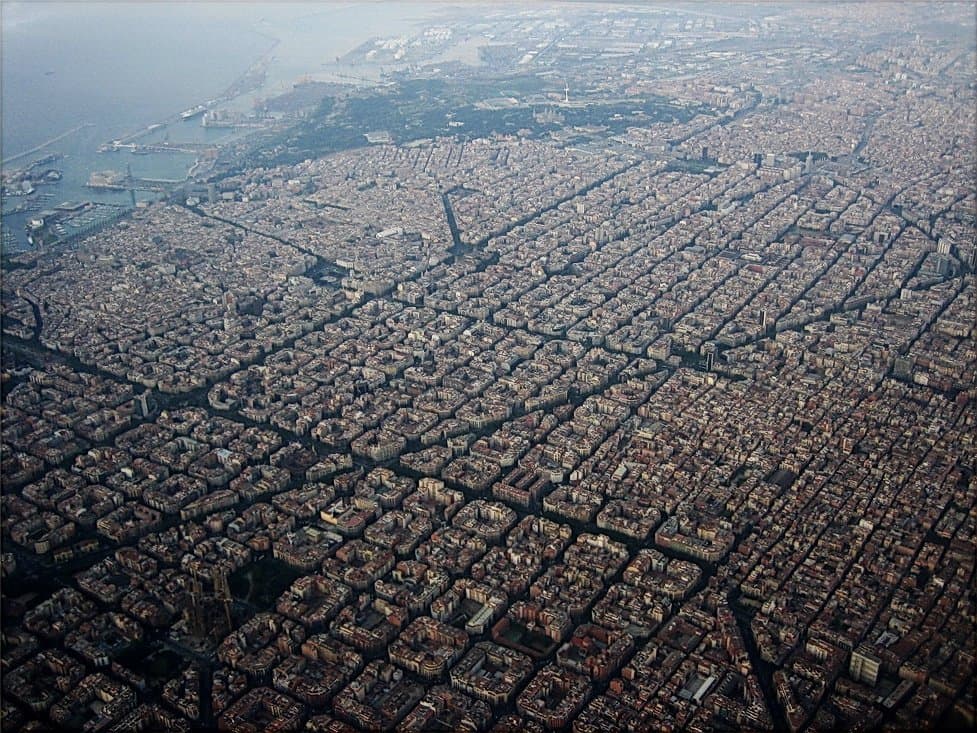
- Tourism. A study of Airbnb in Barcelona, with data from 2007 to 2017, estimated that its activity raised rents by 1.9% in the average neighborhood and by 7% in the areas with the most tourist flats. It does not measure what share of today's crisis is due to tourism. V13 Málaga suspended new tourist flats across the whole municipality from August 23, 2025, for up to three years. V14
- Companies. The Bank of Spain estimated that companies owned 8.1% of the homes rented as a main residence in 2021 (not counting the Basque Country or Navarre). Companies are not the same thing as investment funds. V07
- Empty homes. The 2021 census estimated, from electricity consumption, 3.84 million empty homes, 45% of them in municipalities with fewer than 10,000 inhabitants. They are not a stock ready to be used in 2026. V08
- Construction. The Bank of Spain calculates that between 2021 and 2025 about 750,000 more households were formed than homes were completed. V05
What each party proposes
Updated October 21, 2026. No party had yet published its full manifesto for November 29: we gather what each one has said or written, with the date and a link, without judging it. We will review this when the manifestos come out. Party names are left as they are; in brackets, what the name or acronym means in English.
- PSOE (Partido Socialista Obrero Español, Spanish Socialist Workers' Party)
- On October 10, Pedro Sánchez promised to “reforzar y mantener” [strengthen and maintain] the two decrees that Congress rejected. The Housing Minister, Isabel Rodríguez, said on October 20 that the manifesto is still being drafted, and previewed a land law and a minimum of emergency housing. (Ical, Oct 10 · EFE, Oct 20)
- PP (Partido Popular, People's Party)
- It promises one million homes over the legislative term. For people under 40 buying their first home: loan guarantees of up to 100% and a 60% cut in VAT and in ITP (the property transfer tax). Tax deductions for anyone who extends a lease for up to three years with increases below the CPI, and a law to evict squatters (okupas) within 48 hours. (PP, Oct 21)
- Vox
- It proposes building social housing “masivamente” [on a massive scale] and allocating it with “prioridad nacional” [national priority]. Also freeing up land, cutting taxes and giving young people direct aid to buy. Its secretary general, Ignacio Garriga, said so on October 11. (EFE in 20minutos, Oct 11)
- Frente Amplio (Sumar, IU, Más Madrid y Comuns) (Broad Front)
- It has not presented a manifesto. Sumar defended the decrees: automatic renewal of rental contracts and protection against evictions until 2030. At the launch of Ada Colau's candidacy, Pablo Bustinduy talked about banning tourist flats. (Movimiento Sumar, Sep 29 · El Salto, Oct 17)
- Podemos (We Can)
- On October 3, Irene Montero called for bringing rents down by law, expropriating homes from “fondos buitre” [vulture funds] and banning speculative purchases. (Europa Press, Oct 3)
- Junts (Junts per Catalunya, Together for Catalonia)
- On its website it calls for building more housing, restoring the income-tax (IRPF) deductions for rent and for mortgages, and transferring Sareb's flats and land to Catalonia. (Junts)
- ERC (Esquerra Republicana de Catalunya, Republican Left of Catalonia)
- We found no proposals of its own for Congress. In the Parliament of Catalonia, on October 7 it registered a bill with rental contracts of at least seven years and mandatory extensions for large landlords. (El Nacional, Oct 7)
- PNV (Partido Nacionalista Vasco, Basque Nationalist Party)
- It calls for more social and price-capped housing, regulating seasonal rentals and limiting tourist flats. It rejects the automatic renewal of contracts. (PNV, Sep 30 · Oct 6)
- EH Bildu
- It supports open-ended rental contracts and a large public stock of protected housing. (EH Bildu, Oct 1)
- BNG (Bloque Nacionalista Galego, Galician Nationalist Bloc)
- For Galicia it proposes 16,000 public homes over two legislative terms, that protected housing stay protected forever, and a cap on tourist flats. (BNG)
- Coalición Canaria (Canarian Coalition)
- It wants the power to limit home purchases by non-residents in the Canary Islands, and for a building permit to count as granted if the authorities do not respond within six months. (CC, Oct 1)
How the media told it
On October 2, the first decree fell by 172 votes in favor to 178 against, and the second, the one on rentals, by 166 to 184. The difference was six deputies: the five from the PNV and the one from Coalición Canaria voted yes on the first and no on the second. The deputies of the PP, Vox and Junts, and two from the Mixed Group (Grupo Mixto; one of them the UPN deputy, from Unión del Pueblo Navarro), voted no on both. V21 All the outlets that give the figures agree on them. What changes is where each one puts the focus.
| Piece from October 2 | What it focuses on |
|---|---|
| RTVE Noticiaspublic broadcaster · center“El Congreso tumba los dos decretos de vivienda pese a la presión social y abre la puerta a un adelanto electoral”[Congress throws out both housing decrees despite social pressure and opens the door to an early election] | The “presión social” [social pressure] and the early election. It gives the vote count for the first decree, not for the second, and does not quote any PP or Vox deputy. |
| Agencia EFEstate“El Congreso rechaza los dos decretos del Gobierno sobre vivienda con los votos de PP, Vox y Junts”[Congress rejects the Government's two housing decrees with the votes of PP, Vox and Junts] | What the decrees contained and who voted how. It does not mention the protests. It places Coalición Canaria both among the votes for and among the votes against the second decree. |
| elDiario.esleft“Junts, PP y Vox tumban los decretos de vivienda en el Congreso”[Junts, PP and Vox throw out the housing decrees in Congress] | It opens with Maricarmen's eviction and the street protest. It quotes the Government; it does not quote Junts, the PP or Vox directly. |
| El Paíscenter-left“El Congreso tumba los decretos de vivienda y abona el terreno para un adelanto electoral”[Congress throws out the housing decrees and prepares the ground for an early election] | The debate as a trial of Junts. It is the piece that quotes the most groups, among them PP, Vox and PNV. It explains little about what the decrees contained. |
| 20minutoscenter“Junts cumple su amenaza, tumba los dos decretos de vivienda y deja al Gobierno pendiendo de un hilo”[Junts carries out its threat, throws out both housing decrees and leaves the Government hanging by a thread] | Junts and its refusal, with many voices from the debate. It gives no vote figures at all. |
| El Mundocenter-right“El Congreso tumba los dos decretos de vivienda de Pedro Sánchez y dinamita la legislatura”[Congress throws out Pedro Sánchez's two housing decrees and blows up the legislature] | The defeat as the end of the legislature. It is the only one of the seven that explains why PNV and Coalición Canaria voted no on the second decree. |
| ABC (España)right“'Decreto Maricarmen': Sánchez utiliza la derrota en el Congreso como coartada para agitar la calle”['Maricarmen decree': Sánchez uses the defeat in Congress as an alibi to stir up the streets] | The Government's strategy, with a headline that attributes an intention to it. It includes Vox's argument about immigration. |
These are seven specific pieces, read as they stood on October 21; we do not assess each outlet's overall coverage. The leaning shown is The Contrast's provisional label (criteria, in Spanish). Headlines are shown as published, in Spanish; the English in brackets is our translation.
What we don't know
- What share of the price rise is due to each cause: shortage, tourism, interest rates or purchases by companies.
- Whether the Diputación Permanente will ratify the decrees, or when: no session has been called.
- The effect of the 2024 rent cap: there is only one study, and it is a draft.
- What each party will put in its manifesto: none had published one.
How we did it
We gathered official statistics, Bank of Spain reports, the text of the decrees in the BOE (Spain's official gazette), the Congress Diario de Sesiones (the official record of proceedings), academic studies, party statements and seven pieces of coverage. All the figures were checked against the original document on October 21, 2026, and we recalculated the percentages. Each deputy's vote was counted in the Diario de Sesiones, because it was a roll-call vote and is not in Congress's open data.
Some party websites did not open (PSOE, Vox, Podemos and ERC); for those parties we used dated statements reported by news agencies or media outlets. We did not conduct interviews. The research and writing were done with the help of artificial intelligence and reviewed by the editor of The Contrast; there was no independent outside verification. If we correct anything, we will note it here with the date.
English version, October 22, 2026: translated from the Spanish original with the help of artificial intelligence and reviewed by the editor of The Contrast. Same facts, figures and sources; quotes and document titles are left in their original language.
Sources
Most of these documents are in Spanish.
- V01INE, Índice de Precios de Vivienda [House Price Index], table 79540 (national, annual average, base 2025). Table
- V02INE, Encuesta Anual de Estructura Salarial 2015 [Annual Wage Structure Survey], press release of Jun 28, 2017, p. 1. PDF
- V03INE, Encuesta Anual de Estructura Salarial 2024, press release of May 28, 2026. Release
- V04INE, Índice de Precios de Vivienda, second quarter of 2026, release of Sep 7, 2026. Release
- V05Banco de España (Bank of Spain), Informe Anual 2025 [Annual Report 2025], chapter 2: table 2.5 (p. 150) and chart 2.10 (pp. 155–157). PDF
- V06Banco de España, presentation of the Informe Anual 2025, David López Salido, Jun 18, 2026, slide 45 (map by province). PDF
- V07Banco de España, Documento Ocasional 2432 [Occasional Paper 2432], “El mercado del alquiler de vivienda residencial en España” [The residential rental housing market in Spain] (Khametshin, López Rodríguez and Pérez García, 2024), p. 30 and table 1. PDF
- V08INE, Censos de Población y Viviendas 2021 [2021 Population and Housing Censuses], results on households and dwellings, Jun 30, 2023, pp. 7–8. PDF
- V09Observatori Metropolità de l'Habitatge de Barcelona (O-HB), half-yearly monitoring report on the stressed area, no. 4, April 2026, section 6. PDF
- V10Monras and García-Montalvo, working paper on Catalonia's 2020 rent control (2022; CEPR DP 20018 version, 2025). PDF · CEPR
- V11Jofre-Monseny, Martínez-Mazza and Segú, evaluation of Catalonia's 2020 rent control (accepted manuscript, 2023). PDF
- V12Pérez García, evaluation of Catalonia's 2024 rent cap, preprint not peer-reviewed (arXiv, Feb 9, 2026). arXiv
- V13García-López, Jofre-Monseny, Martínez-Mazza and Segú, “Do short-term rental platforms affect housing markets? Evidence from Airbnb in Barcelona”, Journal of Urban Economics 119 (2020). PDF
- V14Ayuntamiento de Málaga (Málaga City Council), press release of Aug 22, 2025 on the suspension of new tourist flats. Release
- V15BOE, Real Decreto-ley 26/2026, of September 29 (social function of housing), BOE no. 241, Sep 30, 2026: arts. 1–3 and 19. BOE
- V16BOE, Real Decreto-ley 27/2026, of September 29 (rental contracts), BOE no. 243, Oct 1, 2026: sole article and second final provision. BOE
- V17BOE, resolutions of Congress of Oct 2, 2026 ordering the publication of the repeal of RDL 26 and 27 (BOE no. 245, Oct 2, 2026). RDL 26 · RDL 27
- V18BOE, Real Decreto 806/2026, of October 5, dissolving the Cortes and calling elections (BOE no. 248, Oct 6, 2026). BOE
- V19BOE, Real Decreto-ley 28/2026, of October 6 (rental contracts), BOE no. 249, Oct 7, 2026: second final provision (entry into force). BOE
- V20BOE, Real Decreto-ley 29/2026, of October 6 (social function of housing), BOE no. 249, Oct 7, 2026: arts. 1, 2, 7 and 19, fifth and sixth final provisions. BOE
- V21Congreso, Diario de Sesiones del Pleno [record of plenary proceedings] no. 210, Oct 2, 2026: results (p. 3) and roll-call vote (pp. 56–70). PDF
- V22Congreso, Diputación Permanente: Diario de Sesiones no. 211 (Oct 16, 2026) and sessions page, which on Oct 21 said “No hay convocada sesión” [No session has been called]. Record · sessions
- V23Constitución Española [Spanish Constitution], arts. 78 and 86 (ratification of decree-laws, and the Diputación Permanente). BOE
Keep reading
 What is going wrong on Spain's high-speed rail network?Spain · Trains · Ongoing story · 2015–2026
 Human error or system failure? What is known about the Urda train crash and what is still missingSpain · Trains · Ongoing story · 2026
 How the November 29 election worksSpain · November 29 election · Institutions · 2023–2026
The Contrast · Stories in context · Published October 21, 2026, with data as of that date; English version October 22, 2026. More stories