What is going wrong on Spain's high-speed rail network?
Spain had few rail deaths for the size of its network. In 2026 it has suffered its two worst accidents since Angrois. The documents show neither sabotage nor a funding cut. They do show that Adif, the state rail infrastructure manager, knew since 2019 that it could not guarantee detecting rail breaks like the one at Adamuz, and that Urda's 1992 signalling system had frequent incidents and was due to be replaced by early 2026.
Updated November 10, 2026, at 15:30 (mainland Spain time). The investigations are still open: what is known may change. English version November 11, 2026.
Part 1: the Urda crash · Leer en español
In brief
- At Adamuz (January, 46 dead), the investigating authority concludes that the system that recorded a voltage drop the night before was not an alarm system, and that a 2024 risk analysis rated failing to detect a rail break as «intolerable».
- At Urda (October, 69 dead, provisional toll), the LZB signalling system, from 1992, had more than 170 incidents this year, 64 of them affecting traffic, according to the then minister, and its replacement is late. The investigating authority is already asking, provisionally, that trains resume running «on sight» when the line's main system fails.
- Maintenance spending rose by around 25 % after inflation, less than the government suggests, while high-speed traffic grew 46 % (2019–2024). Neither «cuts» nor «record investment» explain what happened.
- We have found no evidence of sabotage.
Was Spain a safe country?
Yes, with caveats. In 2024 Spain recorded 18 of the European Union's 750 rail deaths, 2.4 %, and between 0 and 3 passenger deaths a year from 2015 to 2024 (Eurostat, Spain; Eurostat, EU). The vast majority of the victims were not passengers.
The caveat: significant accidents rose from 42 in 2015 to 77 in 2023, and fell to 57 in 2024 (Eurostat). There are no official figures for 2025 or 2026.
2026 breaks that series. Adamuz and Urda add up to 115 dead (El Español; provisional toll for Urda, according to the Integrated Data Center in CLM24). According to the news agency ACN, three of the five rail accidents with more than 30 deaths in Europe in the last two decades happened in Spain: Angrois, Urda and Adamuz. That list is ACN's. You may have read that the European Union Agency for Railways says 2026 is «the deadliest year of the century»: we opened its 2026 report and it does not say that. It uses 2024 data, leaves out Adamuz and was published before Urda (ERA, p. 22). ACN also attributes it to an Imperial College series we have not been able to consult: we can neither confirm nor refute it.
Was maintenance cut?
Not in euros. According to Adif, maintenance spending went from 720 million in 2017 to 1,120 million in 2025, 56 % more (Infobae). After inflation, the rise is around 25 % (INE). When the then minister Óscar Puente said it had grown more than 50 % «however you measure it», he was exaggerating: it is true in current euros, but not after inflation or relative to the value of the assets; according to Adif AV data published by elEconomista, that spending fell 16 % between 2015 and 2024. Adif's spending figures come from a press release reported by the media, not from audited accounts (the calculations are in our verification annex).
Use of the network grew faster: train runs on the high-speed network rose 46 % between 2019 and 2024, and long-distance high-speed passengers almost doubled between 2022 (23.7 million) and 2025 (44.5 million), partly because of liberalization and the recovery after the pandemic (CNMC, table 19; CNMC, paragraph 60). More trains do not, on their own, prove less safety.
The figures do not match each other either: for 2024, a table with Eurostat data gives 683 million and Adif 1,062, with different scopes nobody has explained. The audited accounts of the high-speed network, which would settle it, we have not been able to open. Until then, nobody has shown whether the money was spent on the protections that failed.
Which protections failed?
Adamuz: a warning that was not an alarm
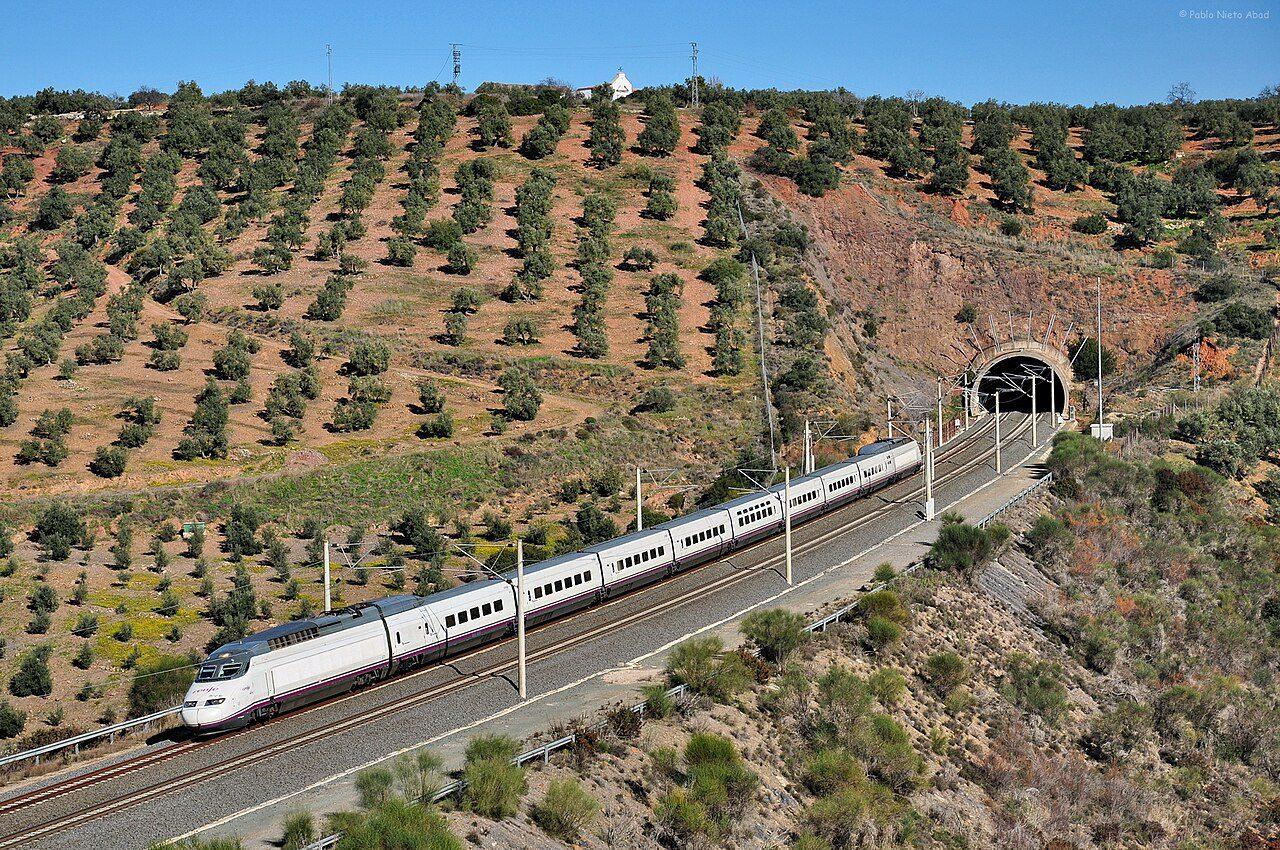
On January 18, a high-speed train derailed at Adamuz (Córdoba) and collided with another: 46 dead. The investigation places the rail break at a weld and keeps as a hypothesis that the rail was already broken before the Iryo passed (CIAF).
On November 5, the independent authority that investigates accidents (AITAT) published a preliminary recommendation explaining why no system could have warned of a break in time (AITAT):
- The system that recorded the voltage drop the night before, at 21:47, «is not an alarm system» («no constituye un sistema de alarma»): it stores data to be checked later, it does not warn in real time.
- The track circuits are designed to detect trains, not breaks. On that stretch they could not guarantee that a break in the outer rail would be detected, and replacing them in 2024 did not solve the problem.
- That project's own risk analysis rated the risk of not detecting a break as «intolerable». Adif considered it covered by track inspections, which the AITAT considers «necessary, but not sufficient».
- The marks on the wheels and that voltage drop are «compatible» with the rail breaking after a train passed at 21:47 and going undetected for about 22 hours, during which 47 train movements went over that spot.
- Since 2017 there have been 44 complete rail breaks on high-speed lines. The circuits detected 18; the other 26 were found by track workers or train drivers.
The AITAT recommends installing break detection on high-speed lines, without setting a deadline. It is a preliminary recommendation, not the final report: it does not establish the cause of the derailment.
In April, Adif maintained it was not proven that a break caused the derailment. Its then president told the Senate, according to Andalucía Información, that 19 trains passed in the previous 22 hours without anyone detecting anomalies (Andalucía Información); the AITAT counts 47 train movements in that time. Neither source explains what its figure includes, and we do not know the reason for the difference. EFE and Onda Vasca wrote that «up to 47 trains» went over the broken rail (EFE). The AITAT document is more cautious: it says the marks on the wheels and the voltage drop «are compatible» with the rail breaking earlier and those 47 movements going over it. In March, the then president explained in Congress that the track circuit serves to locate trains, not to detect breaks (The Objective).
It was not an unknown risk. In 2019, Adif put in writing that its circuits only detect breaks «indirectly» and without guarantee (Adif). Seven years later, according to OKDiario and the Ministry itself, dedicated detection is still being tested, with two prototypes (the second awarded in 2023, BOE). The Ministry argues that no such systems are in use anywhere in the world; there is at least one on a freight line in South Africa (our fact-check FC-ADIF-005, «misleading»).
Urda: a 1992 system with frequent incidents
On October 28 the LZB, the system that monitors trains from the track on the Madrid–Andalusia line, went down. Then, according to the timeline given by the former minister himself, Adif's control center authorized the AVE to continue at «normal running» and did not react to the warning from the Iryo stopped further ahead. That is his version; neither the AITAT nor the court has established the cause (Público). Puente said he did not know why those instructions were given and that he does not blame any worker; Adif denies there were orders to prioritize punctuality (El Debate; Infobae). We explain it in part 1.
The LZB is not an isolated fault. According to the then minister, it has had more than 170 incidents this year, 64 of them affecting traffic (Infobae). Weeks before the crash, Iryo, Ouigo and a former head of the Rail Safety Agency had called it old or obsolete, although some considered it safe (Maldita.es). Its replacement, ERTMS, was awarded in 2021 with a deadline that expired in early 2026, and it is not finished (EFE). We have not found a public explanation from Adif for the delay.
On November 6, the AITAT recommended three provisional measures for high-speed lines to Adif and the State Rail Safety Agency: that orders to resume running after a fault in the main safety system that forces trains onto the backup one include «running on sight» («marcha a la vista»; in the regulations, art. 1.5.1.4.1, running at a speed that allows stopping before any obstacle); reviewing control-center protocols «to specifically cover this situation», and assessing the risks of switching from the LZB to the backup system (EFE; elDiario.es). According to EFE, the AITAT warns that its recommendations are preventive and «do not presuppose the conclusions» of the investigation. Renfe and Adif were still studying a new instruction, and Renfe's dated November 1 was not in force on the 7th (El Español).
What we still do not know is the central piece: what exactly Adif's internal rule for resuming running after an LZB failure said (instruction COI 01/25) and whether the order broke it. As of November 10, nobody has published it.
Why has the Adamuz investigation not concluded?
Because the normal deadline is one year. European rules ask for the final report to be published as soon as possible and, if it does not come within twelve months, an interim statement on each anniversary (Directive (EU) 2016/798, art. 24.2). For Adamuz, that is January 18, 2027. That there is no final report after almost ten months is not unusual. What there is: notes from the investigation and the preliminary recommendation (case file). The cause of the break still depends on the laboratory.
Is it suspicious?
We have found no evidence of sabotage or intent in either accident. The hacker or sabotage theories circulating about Urda have no evidence (Maldita.es; EFE Verifica, in Demócrata). At Adamuz, the investigation is working on the hypothesis of a rail break.
What is worrying is something else. According to the Andalusian High Court (TSJA) and Maldita.es's timeline, after Adamuz Adif removed from the track rail sections with welds and other parts without telling the court; the then minister admitted it was a «mistake». The judge ordered it to return them and refrain from any operation without her authorization, and in March found another 42 meters of track removed without her knowledge (Maldita.es; Europa Press in Infobae). Adif maintains that it preserved the material without tampering with it (El Español), and the CIAF that they were not critical parts. Removing material does not prove evidence was altered; the Civil Guard's report is not public.
Who has to answer
Óscar Puente announced his resignation on November 3, without accepting responsibility for the cause (EFE), and the head of Adif left his post the next day (The Objective). Carlos Cuerpo is taking over the Transport Ministry temporarily, until the government that comes out of the November 29 election is appointed (El Diario de Madrid). As of 15:30 on November 10, after that day's cabinet meeting, we had found no appointment of a new head of Adif. That cabinet did approve, according to El Español, a rail safety decree-law giving the State Rail Safety Agency more inspection powers, and created an Ombudsman for Victims of Public Transport Accidents. The changes of names and rules do not answer these questions:
- Adif: what will it do with the AITAT's recommendation, and by when? What measures did it apply while it knew it could not guarantee detecting breaks?
- Adif: what does instruction COI 01/25 say, and will it publish it? Does it already apply the running on sight the AITAT recommends for Urda? What does its figure of 19 trains include, compared with the 47 movements the AITAT counts at Adamuz?
- Transport Ministry: when will ERTMS be on the Madrid–Seville line?
- State Rail Safety Agency: has the 2024 recommendation on how to authorize a train to resume running after a stop been met yet? At the end of 2025 its implementation had not been reported (CIAF annual report, table 14). It concerned another system, ERTMS, and is not linked to the cause of Urda.
What we do not know
- What instruction COI 01/25 said and exactly what order the AVE received.
- Why the LZB went down on October 28.
- What broke the rail at Adamuz (laboratory), and whether the 21:47 voltage drop on January 17 corresponds to that break (Adif disputes it).
- How much Adif spends on the high-speed network, year by year, according to its audited accounts.
- The Civil Guard's report on the material removed at Adamuz.
- Why the AITAT counts 47 movements in the 22 hours before Adamuz and Adif, 19 trains.
How we did it
- Sources. We opened the official documents linked: the AITAT recommendation, the CIAF notes, its 2025 annual report, the ERA report, Eurostat's victim and accident data, the CNMC's and the European Directive. The AITAT recommendations on Urda we cite through EFE and elDiario.es: we have not been able to open the document. Adif's spending figures come from a press release reported by the media, and the 683 million figure from a press table with Eurostat data we have not opened at the source. The rest comes from the press and we cite it as such.
- Limits. We could not open Adif Alta Velocidad's accounts or the Civil Guard's report on Adamuz. We did not ask Adif or the Ministry for their side for this piece: we report what they have said in public. We do not name workers or victims.
- Review. Prepared with the help of AI, reviewed by another AI and approved by the editor before publication. The English version is a careful translation of the approved Spanish text. If you find an error, write to us: corrections are published here.
Keep reading

The Contrast · Investigations · Series “Trains in Spain, 2026,” part 2 of 2. More investigations